


Anthropic’s launch of Project Glasswing should be understood less as a product announcement and more as a policy warning.
By Shane Tews | April 20, 2026

Today, I share the latest data on normalized U.S. tornado losses since 1954 and a time series of the incidence of the strongest tornadoes since 1975. I doubt you’ll come…
By Roger Pielke Jr. | April 17, 2026

Safety by Design is anchored in a world of engineering certainty that defies the complex realities of outcomes coproduced by platforms and their users. Just as with playgrounds, the burden…
By Bronwyn Howell | April 17, 2026

Shane is joined by Marc Boiron and Nicoletta Kolpakov to discuss the road to widespread adoption of cryptocurrency.
By Shane Tews | April 16, 2026

The CFTC should stand down and let these anti-prediction-market states lose directly on the merits.
By Jim Harper | April 15, 2026

Anthropic’s First Amendment retaliation claim against the Department of War and Pete Hegseth spans two lawsuits and features two federal statutes affecting national security supply-chain risk designations. The artificial intelligence…
By Clay Calvert | April 14, 2026

I appreciate the invitation, surely a positive sign of an intellectual thaw. At the same time, the university gave in to a demand that I be removed from the original…
By Roger Pielke Jr. | April 13, 2026

Just over three months ago, Australia’s world-leading regulations attempting to ban social media use by under-16s came into force. The relevant regulator, the eSafety Commissioner, has released its first compliance…
By Bronwyn Howell | April 13, 2026

As the digitization of the economy accelerates, the friction points facing the adoption of cryptocurrency are becoming more evident. The benefits of on-ramping to stablecoin are obvious: faster and more…
| April 9, 2026
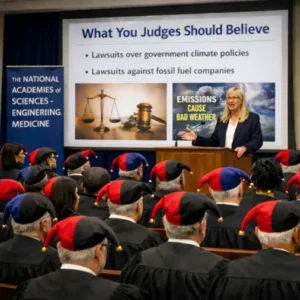
Today, I return to the FJC Manual to discuss another of its chapters: How Science Works, which underlies the entire volume. The chapter appears to be telling judges “how science…
By Roger Pielke Jr. | April 9, 2026

AI has been involved in a race to the bottom, but it’s been towards more alignment. The competitive pressure to release new models has also created powerful incentives to build…
By Will Rinehart | April 9, 2026

The government's brief in Chatrie v. United States accepts that there is room in our law for recognition of property rights in data and for personal-information bailments.
By Jim Harper | April 8, 2026

Rewriting the Communications Act is not just an exercise in updating policy. It is a test of whether Congress can design institutions suited for a world defined by constant change.
By Mark Jamison | April 7, 2026

An Inconvenient Truth turns twenty next month. In the coming weeks, I am sure that there will be many retrospectives seeking to relitigate the scientific claims in the film. But…
By Roger Pielke Jr. | April 6, 2026

Society benefits most when the legal framework supports permissionless innovation, placing primary responsibility on end users who violate the law, rather than discouraging the creation of technologies that can be…
By Daniel Lyons | April 6, 2026