
August 2, 2024
No, Debates over Artificial Intelligence Regulation Do Not Preclude Digital Trade Rules Negotiations
In her unceasing campaign to forestall new international rules for digital trade, US Trade Representative (USTR) Katherine Tai has seized upon a new rationale: the need to forge a new regime for artificial intelligence policy. In a webinar hosted by the left-leaning Center for Economic Policy Research, she amplified her animus against Big Tech, arguing…
August 1, 2024
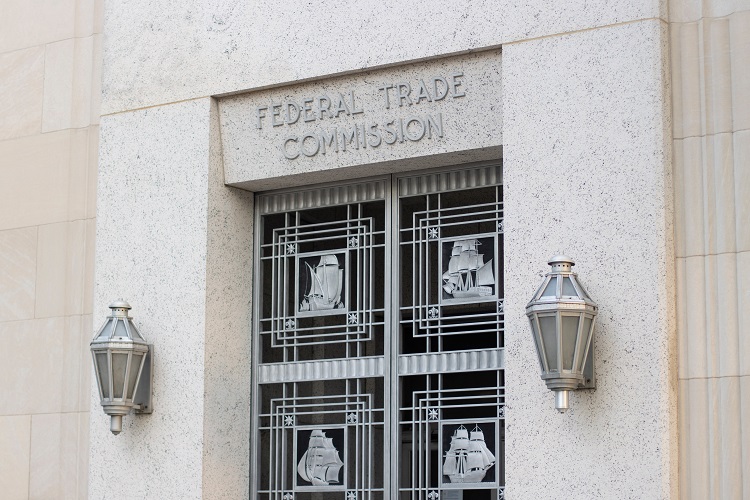
Lax Merger Enforcement Is a Myth
Sometimes a false narrative is repeated so often that people accept it as true. This has been the situation with mergers in the US, where numerous government officials, some academics, and others have accepted and repeated a narrative that merger oversight has grown weak since the 1980s, resulting in increased industry concentration and market power. Unfortunately, apparently no one thought…

July 31, 2024
Looking at Loper Bright More Broadly
Everything is right in my colleague Daniel Lyons’s recent post “Net Neutrality, and Other FCC Initiatives Jeopardized Post-Chevron,” covering practical upshots of the Chevron doctrine’s end at the Federal Communications Commission (FCC). A single turn of phrase he uses inspires me to wax theoretical about just how important the Supreme Court’s Loper Bright Enterprises v. Raimondo decision is. Along with…

July 30, 2024
Observations on the Pomerleaus’ New Argument for a Carbon Tax
Summary My colleagues Kyle Pomerleau and Shuting Pomerleau propose a “carbon”(greenhouse gas emissions) tax as a fiscal tool with which to finance an extension of theindividual income tax reductions implemented in the 2017 Tax Cuts and Jobs Act. Theyargue that such a tax would improve aggregate economic efficiency, in particular byreducing the purported negative externalities…
July 30, 2024
The Right to Listen: Wrongly Rejected in Murthy v. Missouri?
The US Supreme Court this year ruled on three cases—Lindke v. Freed, Murthy v. Missouri, and Moody v. NetChoice—affecting social media platforms and the First Amendment’sguarantee of free expression. While prior posts encapsulated the decisions in Lindke, Murthy, and Moody, this one and others will dive deeper into significant aspects of the opinions I’ve not addressed. The Court’s rejection in Murthy of claims by states and individuals…

July 29, 2024
James C. Scott, Legibility, and the Omnipresence of Tech
Last week, political scientist James C. Scott passed away. Scott’s 1998 book, Seeing Like a State: How Certain Schemes to Improve the Human Condition Have Failed, easily ranks near the top of my most influential books, right alongside Michael Billig’s Thinking and Arguing, Deirdre McCloskey’s If You’re So Smart, and Virginia Postrel’s The Future and Its Enemies. Scott’s primary research…

July 25, 2024
Renewing the Partnership Between Government and Entrepreneurs (with Arun Gupta)
Our government grapples with challenges that demand quick solutions and decisive action. However, the government’s structure often lacks the necessary incentives to drive innovation. This is where Arun Gupta comes in, emphasizing the importance of a renewed partnership between government and entrepreneurs to tackle major societal issues. Arun coauthored Venture Meets Mission: Aligning People, Purpose, and Profit to…
July 25, 2024
NetChoice and the Art of the Facial Challenge
Social media companies found much to like in last month’s blockbuster Moody v. NetChoice decision. Facing legislation that would have forced Facebook, X, and others to carry content against the companies’ will, a majority of the justices endorsed the idea that platforms retain a First Amendment right to editorial control that shields them from state efforts to…

July 24, 2024
Raising the Bar, Not Lowering Our Guard, Around Cybersecurity
Last week’s global IT outage demonstrated the vulnerability of our deeply interconnected digital infrastructure. A single unchecked software update by the cybersecurity company CrowdStrike to its customer, Microsoft, rapidly cascaded into a series of worldwide disruptions throughout the network of operating systems, with CrowdStrike’s cybersecurity solutions safeguarding nearly 60 percent of the Fortune 500, 86 percent of…

July 23, 2024
Harm, Safety, Effective AI Risk Management, and Regulation
On October 30, 2023, the White House announced its Executive Order on the Safe, Secure, and Trustworthy Development and Use of Artificial Intelligence. The order addressed, in an industry-led US context, calls for governments to become actively engaged in regulating artificial intelligence. The European Union Artificial Intelligence Act, passed in March, takes a much more prescriptive approach….