


The US Supreme Court hears oral arguments on February 26 in two First Amendment cases––NetChoice v. Paxton and Moody v. NetChoice––that will determine how much editorial freedom social media platforms possess to define their own “speech-based communities” in…
By Clay Calvert | February 2, 2024

The Supreme Court is poised to reconsider a fundamental principle of administrative law. The “Chevron Doctrine” requires the court to defer to agency interpretations of ambiguous statutes, rather than resolving the…
By Daniel Lyons | February 1, 2024

Semiconductor titans are angling to feast on new public subsidies even before they have digested the first tranche. Two weeks ago in Davos, Intel CEO Pat Gelsinger, in effect, made…
By Claude Barfield | January 31, 2024

It’s increasingly evident that bright futures for both journalism and generative artificial intelligence (Gen AI) hinge on copyright law, licensing agreements, and high levels of cooperation between content creators and…
By Clay Calvert | January 29, 2024

Blockchain technology has the potential to transform financial services, supply chains, and efficiency. Yet as innovators like Digital Assets seek to modernize infrastructure across industries, questions emerge around balancing efficiency,…
By Shane Tews | January 26, 2024

As the Supreme Court prepares for argument next month in Moody v. NetChoice and NetChoice v. Paxton over the constitutionality of laws dictating how social media platforms moderate content and explain removal decisions to affected users, another key First…
By Clay Calvert | January 25, 2024
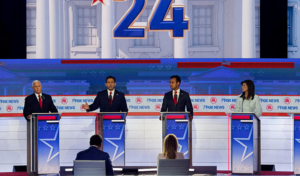
In the current landscape of Republican presidential candidate priorities, there is a noticeable lack of emphasis on technology policy—a crucial area that demands attention. A substantial portion of registered voters, spanning all races and including those…
By Mark Jamison | January 24, 2024
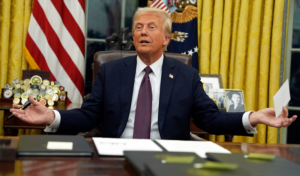
What a difference a week makes. As others and I have predicted, newly-inaugurated President Trump rolled back much of his predecessor’s policy approach to artificial intelligence (AI). But few forecasted…
By Michael M. Rosen | January 24, 2024

Spanning everything from smartphones, more efficient appliances, larger (and thinner) televisions, and new designs in wearables for health and fitness, the Consumer Electronic Show (CES) showcases a vast range of…
By Shane Tews | January 23, 2024

In my latest blog post, I illustrated that the increased privacy rationale used by the majority of the commissioners at the Federal Communications Commission to support the reclassification of broadband internet…
By Bronwyn Howell | January 22, 2024

The highlight for me of David Graeber’s 2015 book, The Utopia of Rules: On Technology, Stupidity, and the Secret Joys of Bureaucracy, is his trenchant critique of the post office, which…
By Jim Harper | January 19, 2024

The latest dispute between the New York Times and OpenAI reinforces the distinction in understanding artificial intelligence (AI) between autonomy and automatons, which we have previously examined. The Gray Lady turned heads late…
By Michael M. Rosen | January 18, 2024

On January 17, the Federal Communications Commission (FCC) is scheduled to report on its Notice of Proposed Rulemaking on Safeguarding and Securing the Open Internet. If it proceeds, broadband internet access…
By Bronwyn Howell | January 17, 2024

Chief Justice John Roberts’s annual year-end reports often examine timely issues facing the federal judiciary, connecting them with historical analogs. For instance, his 2022 report addressed escalating threats of violence directed at jurists––most prominently, one targeting…
By Clay Calvert | January 16, 2024

“What about the kids?” plays an outsized role in the short history of Internet law. From the Communications Decency Act to the Child Online Protection Act, California’s violent video game…
By Daniel Lyons | January 11, 2024