


Last week, the Center for a New American Security held an event on “The Stakes of Sino-American AI Competition.” Near the end, audience member Harry Krejsa of the Carnegie Mellon…
By Will Rinehart | May 8, 2025

A couple of weeks ago, the climate writer Robinson Meyer posted something that’s been on my mind. It gets at something fundamental about the infrastructure of American cities. This is a trite…
By Will Rinehart | May 7, 2025

The Department of Justice (DOJ) has won its case against Google Search. Now it’s proposing remedies that will hinder competition. But isn’t antitrust supposed to do the opposite? One remedy…
By Mark Jamison | May 7, 2025

My colleague Mark Jamison recently observed that “[f]or decades, well-functioning independent regulatory agencies have been a stabilizing force.” Though primarily addressing the Federal Trade Commission (FTC) following President Donald Trump’s…
By Clay Calvert | May 6, 2025

It has been 373 days since Congress enacted the TikTok divest-or-ban law, 105 days since the Supreme Court unanimously upheld the law as constitutional, and over three months since the…
By Daniel Lyons | May 2, 2025

The battle between national interests and technology’s inherently borderless nature is escalating, threatening to reshape the very technologies and services central to our daily lives. Global dynamics are redefining the…
By Shane Tews | April 30, 2025

How much authority and leeway should the government––specifically, the Federal Communications Commission (FCC)––possess to decide whether news is accurate or distorted and, in turn, to punish broadcasters for the latter?…
By Clay Calvert | April 29, 2025

How long, if ever, before we achieve artificial intelligence that can pretty much do everything that a human worker can do currently? My short-hand way of gauging the speculative timeline…
By James Pethokoukis | April 28, 2025
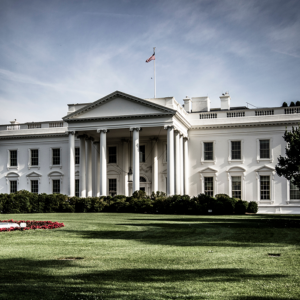
This past January, the White House issued Executive Order (EO) 14154, “Unleashing American Energy,” which rescinded EO 11991 from May 1977. For nearly 50 years, EO 11991 served as a…
By Will Rinehart | April 25, 2025

A recent controversy involving Defense Secretary Pete Hegseth presents a sobering, real-world example of the security risks posed by messaging platforms. Hegseth and other senior Trump administration officials discussed sensitive…
By Shane Tews | April 23, 2025

Much is disturbing about the case of Kilmar Abrego Garcia. For starters, he was deported to an El Salvador prison due to what one Republican US Senator recently called “a…
By Clay Calvert | April 23, 2025

The United States leads the world in artificial intelligence, but it’s not guaranteed to stay there. The bottleneck isn’t talent, ideas, or capital—it’s electricity. Electricity is the binding constraint for…
By Mark Jamison | April 22, 2025

A concerning development from the Trump administration has privacy advocates sounding alarm bells nationwide: a plan to consolidate data from dozens of government agencies into what would amount to a…
By Shane Tews | April 18, 2025

I was listening to Tyler Cowen’s Conversations With Tyler podcast with Jennifer Pahlka, rich and full of detail relevant to my previous post on the pacing problem. In addition to recommending…
By Lynne Kiesling | April 17, 2025

I recently addressed today’s debate over the Press Clause’s meaning 234 years after the First Amendment’s ratification. The rift involves whether the clause is “a technology-specific provision” that safeguards “everyone’s…
By Clay Calvert | April 17, 2025