Welcome to Our Research Archive
Search and filter by content type, issue area, author, and keyword
- ✕ Clear Filter
- AI (1)
- Article (4)
- Articles (973)
- book (1)
- Climate (239)
- climate change (1)
- data dashboard (14)
- electricity (3)
- energy (243)
- Events (25)
- op-ed (2)
- Podcast (3)
- Post (2)
- Puerto Rico (1)
- Report (2)
- Reports (16)
- science (80)
- science funding (10)
- science trust (10)
- technology (537)
- testimony (1)
- Working paper (1)

July 2, 2024
Reflections on Murthy v. Missouri: Opportunities Missed, Lessons Learned
In a six-to-three decision, the US Supreme Court last week declined to address the substantive merits of the plaintiffs’ jawboning claims in Murthy v. Missouri that multiple government officials unlawfully coerced and significantly encouraged leading social media platforms to remove, demote, and place warnings on conservative-tilting content regarding the 2020 presidential election and the COVID-19 pandemic. The majority concluded that the…

July 2, 2024
Climate Fueled Extreme Weather
It is now a ubiquitous cultural ritual to blame any and every weather event on climate change. Those hot days? Climate change. That hurricane? Climate change. The flood somewhere that I saw on social media? Climate change. With today’s post, the first in a series, I go beyond the cartoonish media caricatures of climate change,…

July 1, 2024
The ESG Proxy Advisor Game Starts to Crack
For many years “proxy advisory” services have been provided by a duopoly comprising two companies, Glass Lewis and Institutional Shareholder Services, with a combined market share of 97 percent engendered by blatant political favoritism. “Proxy advice” means recommendations to investors, retirement funds and large asset managers holding major stakes in public companies on how to vote on…

July 1, 2024
The Haphazard Road to Rural Broadband
I recently got a message asking me what I thought about this Washington Times article by Susan Ferrechio on the Broadband Equity, Access, and Deployment (BEAD) program. As part of the Infrastructure Investment and Jobs Act signed in November 2021, Congress set aside $42.45 billion to fund BEAD, whose goal was to help close the broadband gap. But Ferrechio’s article…
July 1, 2024
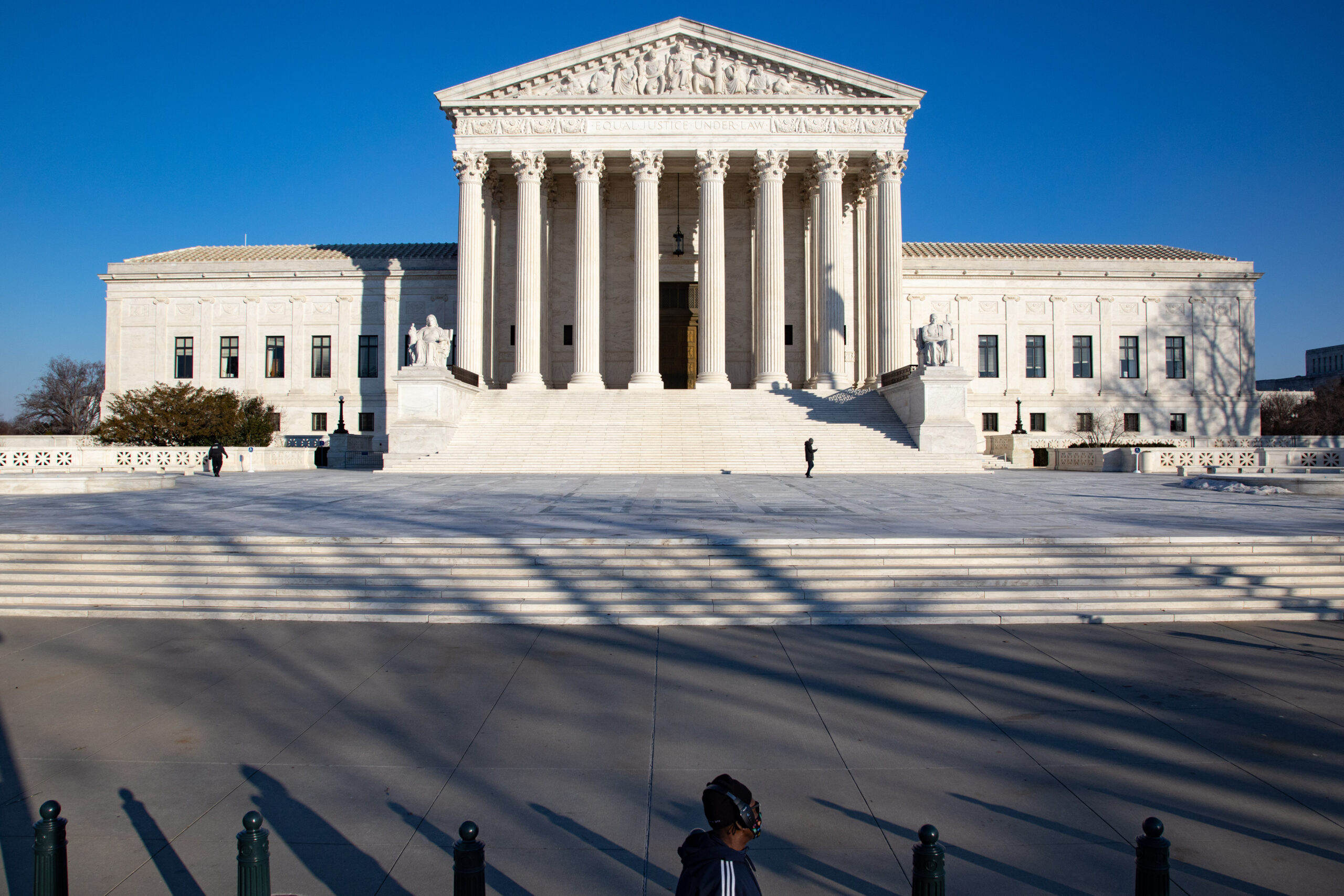
The End of Chevron Deference
In 1981, the Environmental Protection Agency (EPA), under Administrator Anne Gorsuch (the mother of Supreme Court Justice Neil Gorsuch), decide to change how it defined a “source” of pollution under the Clean Air Act Amendments of 1977. An environmental group, the National Resources Defense Council (NRDC) petitioned the EPA in federal court arguing that there was a…

July 1, 2024
Competition in AI Regulation: Essential for an Emerging Industry
Competition is beneficial in many areas of life. It can lead to lower prices, higher quality goods and services, more innovation, and greater variety. When companies compete for workers, they may also improve working conditions and increase compensation. Healthy competition can also lead to good relationships between businesses, which can result in mutual benefits like networking and…

June 28, 2024
Securing the Web with Route Origin Authorizations
As part of the initiative to bolster cybersecurity defenses, the National Telecommunications and Information Administration (NTIA) is championing the widespread adoption of Route Origin Authorizations (ROAs), a security mechanism to prevent cyber-attacks on the internet’s routing system. ROAs prevent unauthorized parties from hijacking IP prefixes or re-routing legitimate network traffic to malicious destinations. On June…

June 27, 2024
AI Regulation Increases Certainty—but for Whom?
Benjamin Franklin’s reputed last great quote, in his November 1789 letter to French scientist Jean-Baptiste Le Roy, opined: Our new Constitution is now established, everything seems to promise it will be durable, but in this world, nothing is certain except death and taxes. One of these certainties pertains to the realities of the physical world; the…

June 26, 2024
Challenging China’s Electric Vehicle Export Surge: US and Europe Diverge
China’s move to dominate the world electric vehicle (EV) market poses major challenges to the world trading system and, the US argues, to national security. While the policy responses are still unfolding, two models are emerging: a European response of economic retaliation mixed with offset accommodation and a US hardline reaction underpinned by both economic and security…

June 26, 2024
That’s AllotA Energy!
Later this week on Colorado’s beautiful Western Slope, I’ll be giving a keynote talk at an energy transition conference. The timing is perfect because I get to share some of my first analyses of the 2024 edition of the Energy Institute’s Statistical Review of World Energy — an absolutely indispensable resource that was just released a few…